

Most lawns in Newtown, CT don’t fail because homeowners neglect them. They fail because the advice people follow was written for somewhere else. Newtown sits in USDA Hardiness Zone 6b, with rocky glacial till soils, variable drainage, and microclimates that shift dramatically between the Housatonic River valley and the hillier terrain near Dodgingtown. Generic lawn care tips don’t account for any of that.
This guide does. Whether you maintain your own property or you’re comparing local lawn care services, what follows is specific to Newtown’s soil, climate, and growing conditions.
Understanding Newtown’s Soil and Growing Conditions
Newtown’s soils are acidic, typically ranging from 5.2 to 6.0 pH. That’s lower than what most cool-season turf grasses prefer (6.2 to 7.0). Left uncorrected, this acidity locks out nutrients like phosphorus and calcium, even when they’re technically present in the soil. Grass looks thin and pale despite regular fertilizing.
A soil test through the UConn Soil Nutrient Analysis Laboratory costs about $12 and eliminates the guesswork. Test results come back with lime and fertilizer recommendations calibrated to Connecticut soils. For Newtown properties specifically, expect the lab to recommend 50 to 75 pounds of pelletized limestone per 1,000 square feet if you haven’t limed in two or more years.
The soil composition itself varies by neighborhood. Properties closer to the Pootatuck River and along Church Hill Road tend toward loamy soils with decent drainage. Head toward Botsford or the wooded lots along Berkshire Road and you’ll encounter heavier clay with slower percolation. That distinction matters for everything from watering schedules to whether overseeding will actually take place.
Choosing the Right Grass for Newtown Lawns
Cool-season grasses dominate in Newtown, and the smartest approach is a blend rather than a single species. A mix of Kentucky bluegrass, perennial ryegrass, and fine fescue covers most residential situations well. The bluegrass fills in bare spots through rhizome spread, the ryegrass germinates fast for quick coverage, and the fescue tolerates the partial shade that’s common under Newtown’s mature oaks and maples.
For heavily shaded lots, particularly the wooded properties common along Hanover Road and Great Quarter Road, a shade-specific mix with a higher proportion of creeping red fescue and chewings fescue is a better bet. These varieties handle four hours of direct sunlight or less, which Kentucky bluegrass simply cannot.
Tall fescue has gained popularity in recent years for its drought tolerance, and it performs well on south-facing slopes that dry out quickly in July and August. Just be aware that tall fescue is a bunch-type grass. It won’t spread to fill gaps on its own the way bluegrass will, so you’ll need to overseed periodically.
Seasonal Lawn Care Calendar for Newtown
Early Spring (March through Mid-April)
Resist the urge to do too much. Newtown’s last frost date averages around May 10, and soil temperatures at this point are still too cold for meaningful root growth. Focus on cleanup: rake matted leaves and debris to prevent snow mold from spreading. If you notice compacted areas from winter foot traffic or snowplow damage along the driveway edges, mark them for aeration later.
A pre-emergent herbicide for crabgrass should go down when soil temperatures reach 55°F at a four-inch depth for three consecutive days. In Newtown, that window usually falls in the last week of April. Apply too early and the product breaks down before crabgrass germinates. Apply too late and you’ve missed the window entirely. The GreenCast Soil Temperature Map provides real-time readings by zip code.
Late Spring (May through June)
This is when Newtown lawns hit their stride. Begin mowing at 3 to 3.5 inches. Taller mowing height shades the soil surface, which suppresses weed germination and reduces moisture loss. Most homeowners cut too short, and in Newtown’s rocky soils, scalping the lawn exposes roots to heat stress quickly.
Fertilize once in mid-May with a slow-release granular fertilizer. A ratio near 20-0-10 works well for established lawns that received lime in fall. If your soil test showed low phosphorus, bump to a balanced formula for that single application.
Summer (July through August)
Newtown averages about 4 inches of rainfall per month in summer, but distribution is uneven. A single thunderstorm can deliver 2 inches, followed by two dry weeks. Lawns need about 1 to 1.5 inches of water per week. Rather than watering daily for 10 minutes (which encourages shallow root growth), water deeply twice a week for 30 to 45 minutes per zone, ideally before 9 a.m.
If drought conditions persist and watering restrictions are in place through the Newtown Water Authority, let the lawn go dormant. Cool-season grasses can survive four to six weeks of dormancy. They’ll brown out but recover once moisture returns. The worst thing you can do is alternate between watering and drought stress, which exhausts the plant’s reserves.
Fall (September through November)
Fall is the single most productive season for lawn improvement in Newtown. Cool nights, warm soil, and reliable rainfall create ideal conditions for seed germination and root development.
Core aeration should happen in September, especially on clay-heavy soils. Follow immediately with overseeding. Seed-to-soil contact is everything; the aeration holes give seeds a perfect germination pocket. Apply a starter fertilizer (high phosphorus, such as 10-18-10) at the time of seeding.
A second fertilizer application in late October, sometimes called a “winterizer,” feeds root growth through November and into early December before the ground freezes. This late-season feeding is what separates lawns that green up fast in spring from those that limp into May looking patchy.
Leaf removal is non-negotiable. Newtown’s tree canopy is dense, and a thick mat of wet leaves will smother new grass, invite fungal disease, and create a haven for voles. Mowing over a light leaf cover with a mulching blade is fine. Anything heavier needs to be blown, raked, or vacuumed.
Winter (December through February)
Stay off frozen turf when possible. Foot traffic on dormant, frozen grass crushes the crowns and creates dead patches visible in spring. If you salt walkways and driveways, be conscious of runoff reaching the lawn’s edge. Sodium chloride damages turf at surprisingly low concentrations. Calcium chloride or sand-based alternatives cause less harm.
Common Lawn Problems in Newtown
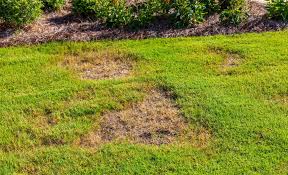
Grubs: Japanese beetle and European chafer grubs feed on grass roots from late summer through fall. If you can peel back a section of turf like a carpet, grubs are the likely cause. Treat with a preventive grub control (chlorantraniliprole-based products like GrubEx) in June, before damage appears. Curative treatments in September with trichlorfon work but are less effective and harsher on beneficial insects.
Broadleaf weeds: Dandelions, clover, and plantain thrive in Newtown’s acidic soils. Correcting pH through liming addresses the root cause. Spot-treating with a selective broadleaf herbicide (2,4-D or triclopyr) in early October is the most effective timing, as weeds are actively pulling nutrients into their roots and translocating the herbicide more efficiently.
Moss: Shady, damp areas with compacted acidic soil grow moss readily. Moss killers containing iron sulfate will burn it back, but it returns unless you address the underlying conditions: improve drainage, raise the canopy by pruning lower tree limbs, aerate compacted areas, and lime to correct pH.
Hiring a Lawn Care Service in Newtown
If you’re evaluating local providers, ask pointed questions. A reputable lawn care company serving Newtown should perform or recommend a soil test before building a treatment program. They should be able to tell you your soil pH and what their lime application rate will be. If a company offers a flat “five-step program” without any soil analysis, that’s a commodity service, not a tailored one.
