

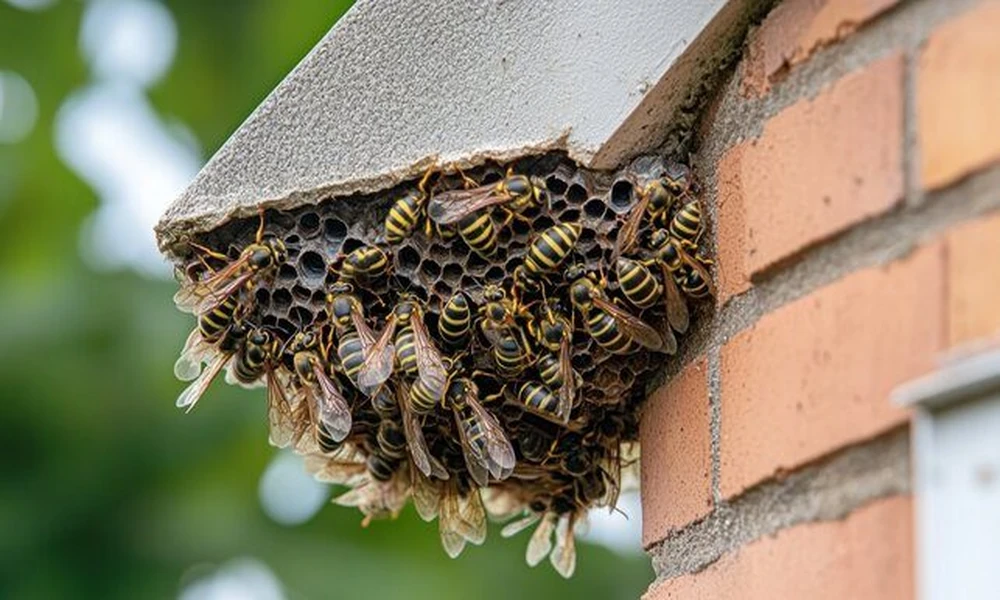
Spotting a wasp nest under the eaves brings on a particular kind of temptation. It’s right there, it doesn’t look that big, and a broom or a can of spray seems like all it would take. That confidence is exactly how people end up stung several times over, sometimes seriously, and often with the nest still buzzing the next morning. The problem with handling a nest yourself is that it goes wrong in ways you don’t see coming until you’re already too close to back out, and that’s the whole reason wasp nest removal services are important.
Wasps defend their nest as a group, and that’s the part most people underestimate. Bump the nest, and you’re not dealing with one annoyed wasp but with dozens or hundreds responding at once. A honeybee stings you once and dies. A wasp keeps going, and an agitated colony will chase a threat across the yard before it gives up.
A Knocked-Down Nest Doesn’t End the Colony
Even when the swatting works, it often doesn’t finish anything. Break a nest apart, and you scatter the colony instead of killing it. The survivors regroup, and if the queen made it out, they rebuild, sometimes right where they were and sometimes deeper into a wall void or soffit where the replacement nest is harder to get at.
The season also works against you. By late summer, the colony has hit its largest size, food gets scarce, and the wasps are short-tempered because of it. So, the time of year when nests finally catch your eye is the same time they’re most dangerous to bother.
The Hidden Nests Are the Dangerous Ones
A nest hanging off a visible branch is the easy version. The ones that cause trouble are the ones you can’t fully see:
- Inside wall voids, reached through a small gap in the siding.
- Up in attics, soffits, and roof overhangs.
- Yellowjacket nests in old burrows or tucked into landscaping at ground level.
- Behind shutters, inside vents, or in grill and utility housings.
Spray at the visible opening on one of these, and you rarely reach the colony packed in behind it. What you do accomplish is making your presence known to every wasp inside. Ground nests are the sneakiest of the bunch. Step too close to a hidden yellowjacket burrow, and the swarm boils up out of the dirt before you’ve registered it’s there.
When the Stakes Are Higher Than a Sting
For most people, a sting or two hurts, and then it’s over. For anyone with a wasp allergy, it’s a different story, and a defensive swarm can turn into an emergency fast. Even people who’ve never reacted badly before can develop a serious reaction with no warning. That alone is reason enough not to gamble on a large or awkwardly placed nest.
This is exactly the kind of job you hand to a professional. Palisade’s technicians treat the colony at its source, so it clears out for good instead of relocating and rebuilding a few weeks later. They come equipped for the nests a homeowner can’t safely reach, and they consider a colony’s behavior before going anywhere near it.
If you want to size up a nest yourself before calling anyone, keep it cautious:
- Stay back and watch the flight path to find the real entry point.
- Never seal a nest opening in a wall, or the trapped wasps chew inward toward the living space.
- Don’t spray or swat near a nest, since both set off the swarm.
- Leave ground nests alone entirely, since there’s no telling their size from outside.
- Hand off anything large or concealed.
Knocking a nest down yourself feels like the fast, cheap answer. More often it scatters the colony, earns you some stings, and pushes the real problem somewhere harder to reach. Wasps are one of the few pests where calling a professional is the safest choice.
